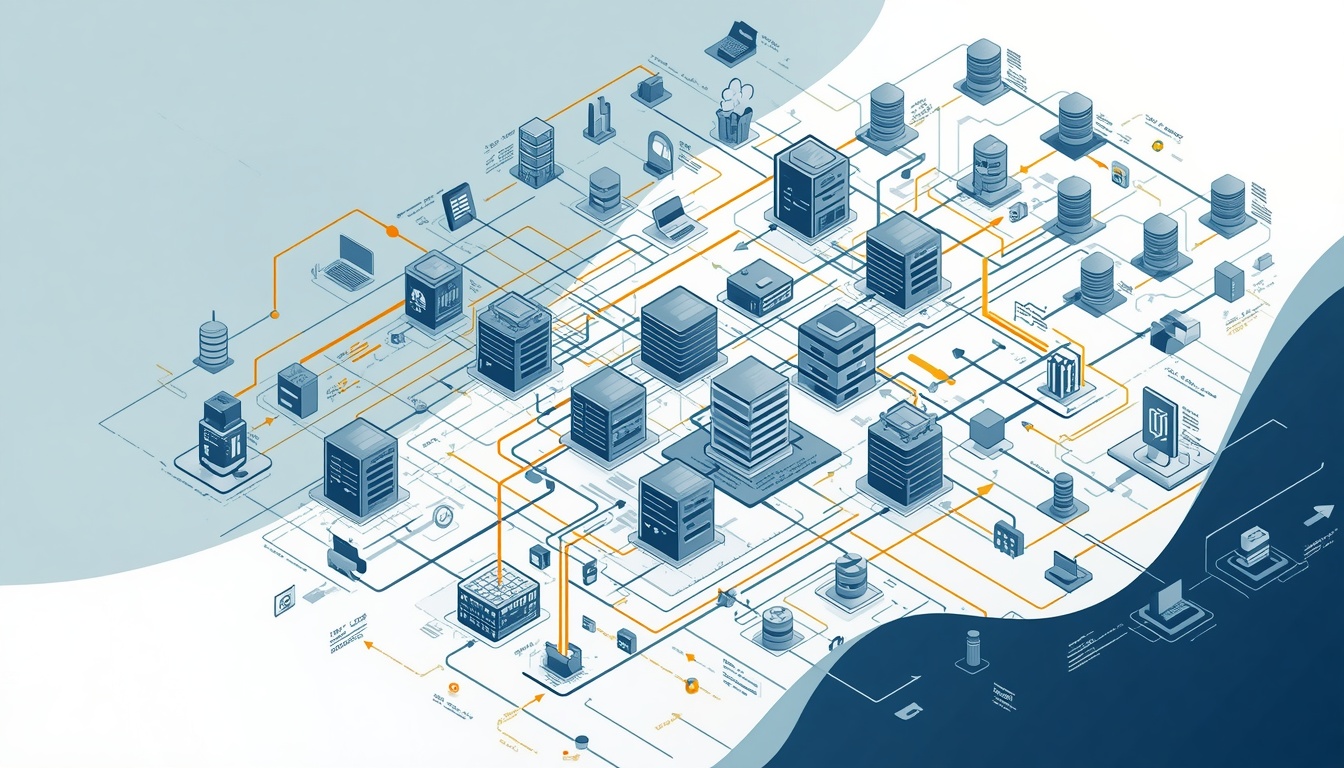
Integration Platform gatekeepers shape enterprise architecture, vendor economics, and strategic sourcing decisions across the largest global corporations.
The Business Announcer audience requires decisive analysis, not platitudes: this briefing maps market power vectors, identifies the engineering and contractual control points used by leading iPaaS vendors in 2026, and lists executable alternatives and levers for executive action.
The evidence suggests buyers now face concentrated supply, rising switching costs, and embedded monetization layers that affect TCO and acquisition planning.
This report blends platform economics, procurement playbooks, and architecture-level remedies to support board-level decisions and investment theses.
iPaaS Gatekeepers: Market Power and Control Points
iPaaS gatekeepers exert influence through concentrated market share, proprietary connectors, and embedded transaction layers that shift margins and lock-in.
Buyers see this influence in vendor roadmaps, pricing tiers, and who controls the integration runtime and metadata model.
Top vendors capture disproportionate enterprise spend through recurring subscription models and platform services; in 2026 the top four providers account for an estimated majority of global enterprise iPaaS revenue.
That concentration raises both negotiating leverage and systemic risk for large portfolios relying on a single integration platform.
Control points include connector breadth, proprietary transformation languages, runtime placement (cloud vs on-prem), and meta-management layers such as API catalogs and observability.
Each control point translates to switching friction: custom connector rewrites, revalidation of transformation logic, and reestablishing SLAs across dependent business services.
Market Concentration and Pricing Levers
Gatekeepers aggregate economic rents by bundling connectors, operations tooling, and ecosystem marketplaces, converting usage into lock-in.
Vendors standardize billing around message volumes, connector sessions, and execution tiers that escalate costs nonlinearly as load and feature needs grow.
Strategic reality requires executives to quantify marginal cost breakpoints where vendor economics flip from efficient to extractive.
Measure current spend per integration, projected growth, and the vendor’s incremental price steps to model five-year TCO and negotiation targets.
Technical Control Points and Operational Impact
Technical control points determine the practical difficulty of replacing a vendor and the operational risk during transition windows.
Examples include proprietary transformation syntaxes, connector SDKs with closed extensions, and runtime observability tied to vendor consoles.
Mapping those control points against business-critical flows reveals which integrations are effectively non-migratable without material downtime.
Prioritize decoupling efforts where control points intersect high revenue streams, regulatory data, or customer-facing SLAs.
Critical metric: quantify vendor-dependent integrations as a percentage of revenue-impacting transactions; Strategic Takeaway: target >60% decoupling for high-risk lines within 18 months.
Vendor Alternatives, Lock-In Risk, and Strategic Levers
Enterprises can reduce gatekeeper power by adopting hybrid architectures, open-source runtimes, or multi-vendor strategies that split responsibilities across orchestration, runtime, and governance.
These alternatives change the bargaining posture of buyers and create optionality for M&A and divestiture scenarios.
Alternative patterns include: API-first integration with open connectors, self-hosted integration runtimes, and neutral metadata layers that translate between vendor-specific models.
Each pattern imposes upfront engineering cost but compresses long-term vendor margin capture and reduces switching friction.
A practical levers framework for executives includes procurement clauses, technical exit criteria, and staged migration backstops.
Procurement must force transparent telemetry pricing, data portability clauses, and contractual SLAs for export of connectors and transformation definitions.
Alternative Architectures and Migration Paths
Hybrid architectures split orchestration and runtime: use vendor orchestration where speed matters, and run a neutral, containerized runtime for mission-critical flows.
This approach limits vendor access to operational data and provides a clear substitution path for high-risk workloads.
Migration paths require adapter layers that normalize vendor-specific semantics into a canonical model and automated test suites to validate parity.
Plan migrations as product releases, with integration acceptance criteria and rollback gates to preserve customer experience and regulatory compliance.
Contractual and Procurement Strategic Levers
Contractual levers must be operationally enforced: insist on exportable connector schemas, defined migration assistance, and price caps tied to growth metrics.
Include audit rights for usage metering and criteria for invoking neutral third-party escrow for metadata and runtime components.
Leverage competitive threat economics: run parallel PoCs with self-hosted runtimes to establish credible alternatives, and set contract KPIs tied to demonstrable migration effort reductions.
This converts theoretical negotiation leverage into quantifiable savings and risk mitigation in board-level metrics.
Critical metric: enforce a contractual exportability SLA with penalties, and track projected savings versus baseline TCO over a 36-month horizon.
Economics and Platform Monetization
Platform monetization strategies determine how much of integration value vendors capture versus the enterprise and partners.
Understanding these strategies clarifies where margins sit and where negotiation can reclaim value for the buyer organization.
Common monetization levers include per-message pricing, connector premium fees, marketplace revenue shares, and managed services uplift.
Enterprises that ignore these layers incur hidden inflation in cloud operating expenses and find integration budgets escalating faster than application budgets.
Strategic reality requires modeling monetization across three dimensions: transactional volume, connector complexity, and ecosystem service dependencies.
Use scenarios that stress-test pricing thresholds at 2x, 5x, and 10x growth to determine when alternative architecture investment breaks even.
Pricing Models and Margin Structures
Vendors use tiered usage models with sharp inflection points that can double per-unit cost at scale, particularly when scaling cross-tenant multi-cloud traffic.
Marginal cost to the vendor on execution often remains low, but price elasticity is limited for mission-critical integrations.
CTOs should compile a vendor-specific elasticity matrix that maps volume to effective price per transaction and to margin capture by the vendor.
Quantify how much of each incremental dollar flows to vendor gross margin to identify reclaim opportunities via architectural change.
Ecosystem Monetization and Partner Leverage
Gatekeepers monetize ecosystems through certified partners and marketplaces, capturing fees on implementation, support, and third-party extensions.
That creates a two-sided revenue stream where partners depend on platform reach as much as buyers depend on partner capability.
Enterprises can exploit partner dynamics by cross-qualifying alternative partners for neutral runtimes and using partner onboarding costs as a negotiation lever.
This shifts ecosystem incentives and can reduce platform fees while preserving access to specialist capabilities.
Critical metric: calculate vendor ecosystem revenue share impact on total integration spend; Strategic Takeaway: restructure partner engagements to reduce embedded platform fees by 15-25% within 12 months.
Architecture, Data Gravity, and Integration Patterns
Architectural decisions determine where integration workloads live and how data gravity amplifies vendor stickiness over time.
Data gravity concentrates value where data and compute co-reside, increasing the cost of moving integrations and analytical pipelines.
Placing integration runtimes close to data stores optimizes latency but creates data residency lock-in when vendors host both runtime and storage.
Enterprises must balance the operational efficiency of co-location against the systemic risk of being unable to migrate analytic workloads.
Integration patterns that minimize data egress and maximize stateless transformations improve portability, while stateful flows increase migration complexity.
Standardize on idempotent, stateless designs where possible and isolate stateful operations behind well-defined, auditable interfaces.
Platform Architecture Influence on Control
Centralized orchestration centralizes control but magnifies vendor leverage; distributed runtimes reduce single-vendor dependency but raise coordination costs.
The correct architecture depends on transaction criticality, regulatory constraints, and the cost-benefit profile of avoiding lock-in.
Adopt a layered model: neutral orchestration and metadata catalog, vendor runtimes for commodity connectors, and self-hosted runtimes for regulated workloads.
This model preserves vendor speed while giving enterprises control over high-risk data and business-critical flows.
Data Gravity and Operational Impact
Data gravity affects not only migration cost but also security posture, compliance obligations, and real-time analytics capability.
Moving terabytes of event or customer data between platforms creates both time-to-market delays and compliance exposures during transit and reprocessing.
Plan for data staging strategies, canonicalization layers, and transitory escrow environments to limit downtime during migrations.
These engineering patterns reduce operational risk and preserve analytic continuity while enabling vendor substitution when necessary.
Critical metric: measure data gravity as TBs of dependent storage per integration domain; Strategic Takeaway: cap single-vendor data gravity exposure at 30% of critical analytics workload.
Governance, Compliance, and Risk Mitigation
Gatekeeper architectures interact directly with compliance regimes and operational risk profiles, requiring governance that spans legal, security, and engineering domains.
Enterprises must map platform control points to regulatory obligations, including data subject portability and cross-border transfer rules.
Operational risk includes vendor outages, API versioning breaks, and telemetry gaps that hinder incident response.
Governance frameworks must enforce redundancy, runbooks, and independently verifiable observability to reduce single points of failure.
Embedding stop-gap controls such as circuit breakers, replay queues, and independent logging increases complexity but reduces systemic vendor risk.
These controls support contractual remedies and operational recoverability during vendor transitions or incidents.
Regulatory and Compliance Control Points
Privacy, data residency, and sector-specific regulations create immutable boundaries that vendors must respect and that buyers must enforce.
Gatekeepers that control data transformation or storage can become compliance chokepoints if contracts do not explicitly define responsibilities and audit rights.
Negotiate for audit-friendly features: immutable logs, exportable provenance metadata, and certification attestations that match internal compliance evidence standards.
These provisions reduce audit time, remediation cost, and exposure during regulatory inquiries.
Operational and Security Governance
Security governance must treat integration layers as critical infrastructure, enforcing identity, least privilege, and supply chain controls on connectors and SDKs.
Third-party connectors represent a primary attack surface; validate them with continuous scanning and signed artifacts.
Operational governance requires SLOs, runbooks, and independent observability that do not rely solely on vendor dashboards.
Establish internal dashboards fed by vendor telemetry exports to maintain incident response capability and to validate vendor SLA compliance.
Critical metric: require vendor telemetry export latency under 60 seconds and independent SLO verification; Strategic Takeaway: create an internal minimum security posture for all integration runtimes.
Procurement, M&A, and Strategic Sourcing
Procurement must act as a strategic function that reduces total cost of ownership and preserves future optionality during M&A or divestiture.
Vendor contracts should align with portfolio strategy, specifying support for corporate restructuring events and data extraction assistance.
M&A scenarios amplify integration complexity; acquiring a business tied to a single iPaaS vendor creates contingent liabilities and potential stranded costs.
Due diligence must include an integration portability assessment and a remediation budget tied to achievable transition timelines.
Procurement can use staged commitments, escrowed artifacts, and mandatory migration assistance credits to limit these liabilities.
These contractual elements convert uncertain future costs into quantified line items manageable within deal economics.
Vendor Selection Scorecard
A structured scorecard reduces bias in vendor selection; scorecards must quantify control points, runtime models, pricing elasticity, and compliance fit.
Use normalized scores for connector coverage, exportability, runtime portability, price slope, and ecosystem fee exposure to compare vendors objectively.
| Gatekeeper Control Scorecard: | Vendor | Connector Breadth (0-10) | Exportability (0-10) | Runtime Portability (0-10) | Price Slope (0-10) | Ecosystem Fee Exposure (0-10) |
|---|---|---|---|---|---|---|
| Vendor A | 9 | 4 | 3 | 8 | 7 | |
| Vendor B | 7 | 6 | 6 | 5 | 5 | |
| Vendor C | 6 | 8 | 8 | 4 | 3 |
Use the scorecard to drive procurement RFPs and to set negotiation thresholds.
Select the vendor whose composite score aligns with your risk tolerance and migration budget, not merely with feature checklists.
M&A and Consolidation Playbook
During acquisitions, map any target’s integration dependencies and estimate the cost to standardize on your canonical integration model.
Include migration reserves and conditional purchase price adjustments tied to demonstrable migration time and cost metrics.
Consolidation should proceed in waves: stabilize business-critical flows first, then rationalize connectors and decommission redundant runtimes.
Track realized savings against projected targets and use that data to refine future sourcing and integration strategies.
Critical metric: require vendor scorecard minimum composite score aligned to a maximum acceptable migration reserve, and lock contractual migration credits for M&A targets.
FAQ
How should a CTO quantify switching cost from a major iPaaS vendor for a 10,000-transaction-per-second workload?
Estimate switching cost as three components: engineering migration hours, testing/validation cycles, and lost revenue risk during cutover.
Multiply total effort by blended labor rates and add infrastructure delta costs for parallel run. Validate with a constrained PoC that migrates a representative partition to refine the estimate.
What procurement clauses most effectively reduce gatekeeper pricing power in enterprise contracts?
Enforce exportability SLAs, flat-rate caps on per-transaction uplifts, escrow of connector schemas, and third-party audit rights for usage metering.
Tie price escalators to independent indices, and require migration assistance credits for early termination to convert theoretical leverage into enforceable relief.
Which architectural pattern delivers the best balance between speed and vendor independence for regulated workloads?
A layered model that uses vendor orchestration for commodity connectors and a self-hosted runtime for regulated workloads preserves developer velocity.
Isolate regulated data with canonical interfaces and enforce auditable transformation logs to enable substitution without re-certifying downstream analytics.
How can an acquirer value embedded iPaaS liabilities during due diligence?
Quantify remaining contractual term value, estimate migration reserves using the vendor scorecard, and model uplift in operating expense if the acquired entity stays on the incumbent platform.
Translate those figures into conditional purchase price adjustments or escrowed funds to make liabilities explicit to sellers and boards.
What operational monitoring must remain independent from the vendor to ensure incident readiness?
Maintain an independent observability plane that ingests vendor telemetry exports, supplier health metrics, and synthetic transaction tests.
Ensure alerting, runbooks, and incident postmortem ownership remain internal to preserve control over SLAs and to support contractual enforcement.
Conclusion: Integration Platform (iPaaS) Gatekeepers: Market Power, Control Points, & Vendor Alternatives
Enterprises face concentrated vendor power in 2026 that manifests across technical controls, pricing structures, and ecosystem monetization.
Strategic decisions must balance short-term delivery velocity against long-term optionality and risk exposure, using procurement, architecture, and governance levers to reclaim value.
Action items: map control points, run parallel PoCs for neutral runtimes, enforce exportability clauses, and normalize a vendor scorecard in sourcing.
These steps reduce vendor rent extraction and stabilize integration budgets while preserving innovation velocity across product lines.
Forecast (12 months): buyers will demand stronger contractual portability and start implementing neutral runtimes, producing measurable reductions in vendor price slopes.
Venture and private equity appetite will favor integration-agnostic acquisitions that minimize post-deal migration reserves, and strategic vendors will respond with more flexible exportability features, but pricing pressure will persist.
Tags: iPaaS, vendor lock-in, platform economics, integration architecture, procurement strategy, data gravity, platform governance