-
 Saturday, 25th April, 2026

 Saturday, 25th April, 2026
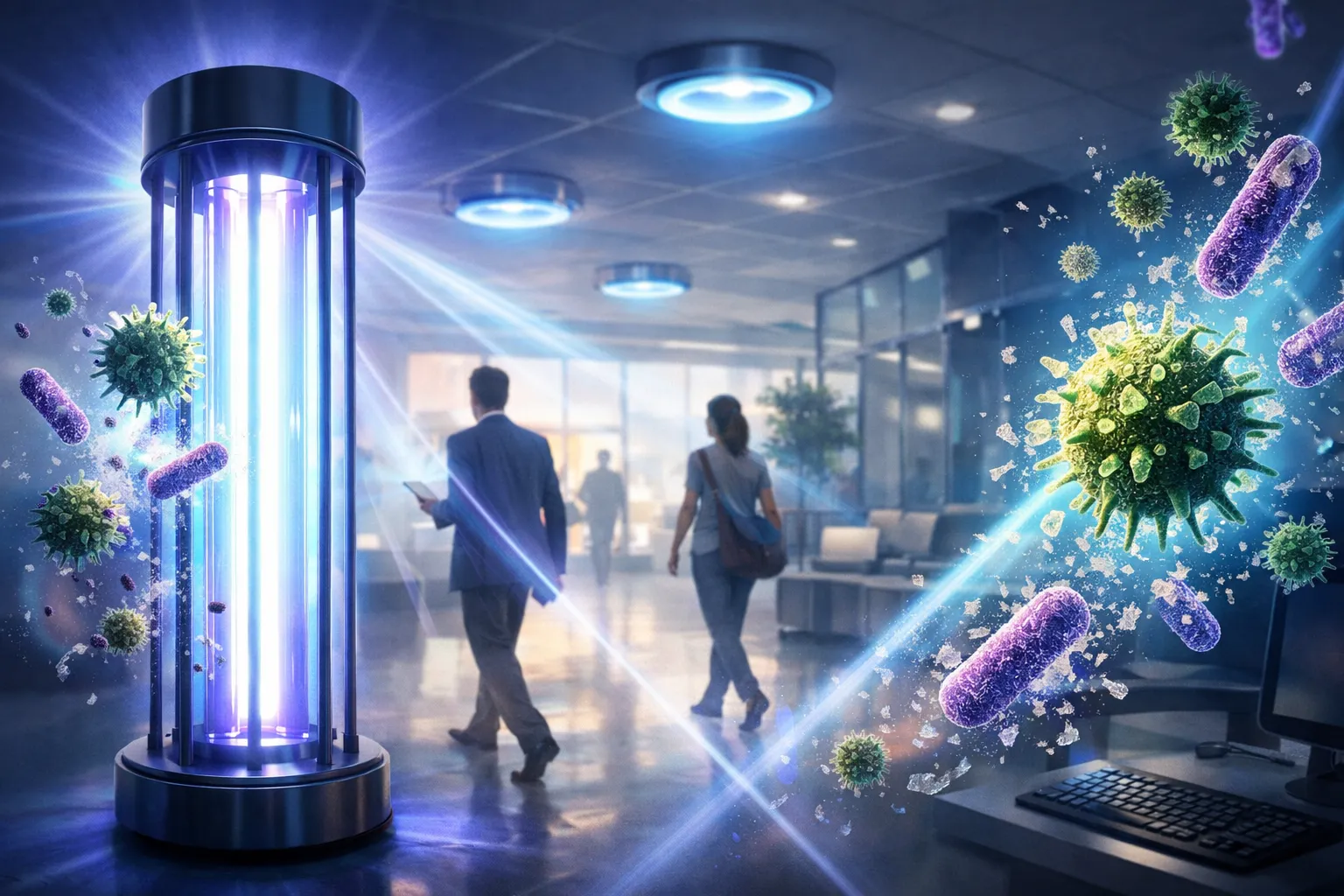
Far-UVC stands out as the next big step toward creating truly safe, germ-free spaces in workplaces and public areas. This clever UV-C approach, operating at exactly 222nm, knocks out viruses, bacteria, and all sorts of pathogens really well yet it causes zero harm to people's skin or eyes. Traditional UV-C lights force everyone to clear the room during use, but far-UVC runs safely nonstop even with folks present, making it ideal for busy spots like offices, hospitals, shops, and buses or trains. Fresh studies from 2025 back this up solidly, showing strong kill rates against germs alongside excellent safety results even after extended eye exposure tests that turned up no issues at all. The whole sector is picking up serious speed now, with market forecasts pointing to the far-UVC light source business jumping from roughly USD 250 million in 2024 to more than USD 1 billion by 2033, driven by CAGRs topping 18%.
Far-UVC is a type of UV-C light. It operates at 222nm. Standard UV-C uses 254nm. That harms skin and eyes. Far-UVC does not penetrate deep. It stops at dead skin layers. Proteins absorb it. This makes far-UVC safe for occupied rooms. Research shows far-UVC inactivates pathogens. It damages their DNA and proteins. Viruses like coronavirus lose the ability to infect. Bacteria stop growing. Studies from Columbia University confirm this. Far-UVC reduces airborne viruses by over 99%.
Businesses value this. Offices use far-UVC to cut sick days. Healthcare settings apply it for infection control. Public spaces install it for safety.
Far-UVC light emits at 222nm. This wavelength targets microbes. It breaks bonds in their structures. For viruses, it inactivates RNA. For bacteria, it harms cell walls. Air and surfaces get clean. Far-UVC lamps shine on areas. They run continuously. No need to empty rooms. This differs from old UV methods. Tests prove effectiveness. One study used a room chamber. Far-UVC cut infectious viruses by 99.8%. Ventilation rates improved. Equivalent to 184 air changes per hour.
Business leaders see benefits. Far-UVC fits in HVAC systems. It boosts air quality. Companies save on health costs. For expert commentary on industry trends, visit businessannouncer.
Safety drives far-UVC adoption. Studies test skin exposure. No damage occurs at set limits. Eyes stay protected too. Animal tests show no harm over time. Regulators set guidelines. American Conference of Governmental Industrial Hygienists provides limits. Far-UVC stays within them for 8-hour use. Human trials confirm safety. Volunteers expose skin to far-UVC. No burns or issues appear. This contrasts with 254nm UV-C. Businesses prioritize worker health. Far-UVC allows safe operations. It reduces infection risks without side effects. For more information visit CDC on germicidal UV.

Far-UVC suits many business uses. Offices install ceiling lamps. They clean the air during work hours. Employees breathe safer air. Retail spaces use far-UVC. It disinfects high-traffic areas. Customers feel secure. Sales may rise from better experiences. Transportation hubs apply far-UVC. Airports and trains reduce germ spread. Passengers travel with less worry. Food industry benefits. Far-UVC cleans surfaces. It prevents contamination. Compliance with health rules improves.
Healthcare demands clean spaces. Far-UVC fights hospital infections. It inactivates MRSA and Candida auris. Operating rooms use far-UVC. It runs during procedures. Surgeons work without interruption. Patient rooms stay germ-free. Far-UVC reduces airborne pathogens. Recovery times shorten. Studies show far-UVC cuts infections. One trial in occupied rooms inactivated 98% of microbes. Businesses in healthcare invest in far-UVC. It lowers costs from illnesses.
Public areas need constant disinfection. Schools install far-UVC. It protects students from flu and COVID. Restaurants use far-UVC lamps. Diners eat in clean air. Business owners see fewer outbreaks. Gyms apply far-UVC. Sweat and close contact spread germs. Far-UVC keeps equipment safe. Events venues benefit. Large crowds gather. Far-UVC reduces transmission risks. For startup trends in disinfection tech, explore businessannouncer.
Far-UVC market grows fast. Value reached USD 505 million in 2025. It hits USD 1.9 billion by 2035. CAGR is 12.87%. Drivers include health awareness. Post-COVID, businesses seek safe tools. LED tech lowers costs. North America leads. Europe follows. Asia-Pacific expands quickly. Key players: Ushio, UV Medico, LightSources. They produce far-UVC lamps. Investments rise. Companies fund R&D. New products emerge.
Trends shape the far-UVC future. Integration with smart systems occurs. Sensors control far-UVC output. LED far-UVC advances. They last longer. Energy use drops. Sustainability matters. Far-UVC replaces chemicals. Businesses go green. Regulations evolve. FDA clears devices. This boosts confidence. Partnerships form. HVAC firms add far-UVC. Buildings get built-in protection..

Startups enter far-UVC space. They focus on portable devices. Small firms innovate fast. Funding flows. Venture capital backs far-UVC. Seed rounds reach millions. Opportunities exist in niches. Water treatment uses far-UVC. Agriculture applies it for crop health. Businesses partner with startups. They gain new tech. Growth accelerates. Challenges include costs. Prices fall with scale. Adoption rises.
|
Opportunity |
Potential Impact |
Key Sectors |
|
Portable Devices |
High mobility |
Travel, Retail |
|
HVAC Integration |
Continuous clean |
Offices, Healthcare |
|
Water Disinfection |
Safe supply |
Food, Municipal |
|
Agriculture |
Disease control |
Farming |
Far-UVC brings real, practical health advantages straight to workplaces and the people in them. It tackles airborne infections head-on by wiping out viruses such as coronaviruses along with various bacteria. Research indicates this tech can prevent roughly 2.4 sick days per employee every year under ordinary winter circumstances. With fewer people calling in sick, overall productivity gets a noticeable lift since teams stay more consistent and on task. Businesses see healthcare costs come down thanks to fewer illness cases spreading around.
Cuts sick days by 2.4 per employee annually in typical flu seasons.
Boosts productivity through fewer absences and consistent operations.
Inactivates over 99% of airborne pathogens like coronaviruses.
Lowers healthcare expenses for businesses and society.
Offers high benefit-cost ratios, reaching 290 times the investment in virus seasons.
Far-UVC at 222nm does not reach live skin cells. It absorbs in dead layers.
Far-UVC allows use in occupied spaces. Standard UV-C requires empty rooms.
Healthcare, offices, retail, and public transport see big gains.
Yes. Studies show it inactivates over 99% of airborne coronavirus.
It grows at 12.87% CAGR. Reaches USD 1.9 billion by 2035.