-
 Friday, 24th April, 2026

 Friday, 24th April, 2026
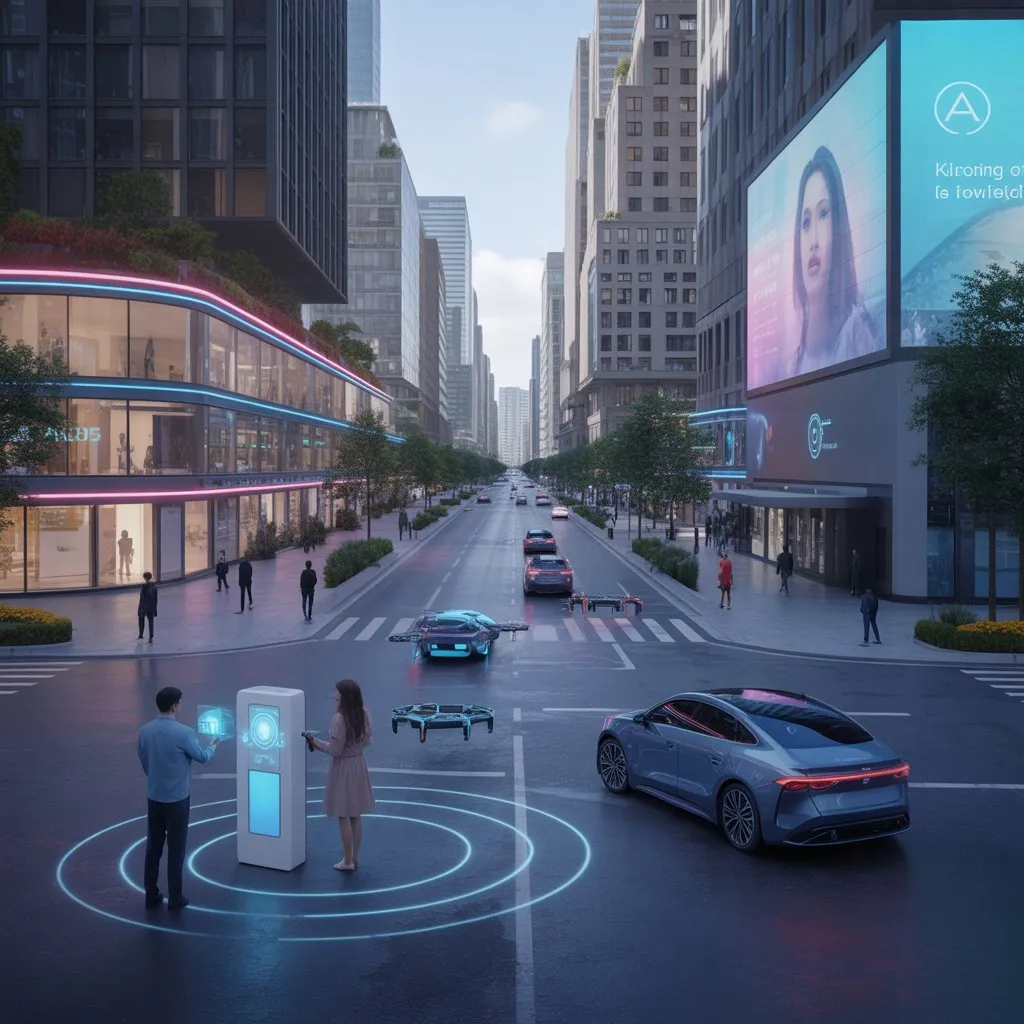
As we step into a new era of technology, the future of AI stands poised to transform how we navigate our daily routines, from morning commutes to evening unwinds. This evolution isn't just about flashy gadgets; it's about seamless integration that makes life more efficient and intuitive. Imagine waking up to a home that anticipates your needs, or a workplace where repetitive tasks vanish, allowing creativity to flourish. With rapid advancements in artificial intelligence applications, we're witnessing a shift that promises not only convenience but also profound impacts on productivity and innovation across various sectors.
In the coming years, AI trends will redefine personal and professional landscapes by embedding intelligence into the fabric of our existence. For instance, predictive analytics powered by sophisticated algorithms will forecast everything from traffic patterns to personal health risks, enabling proactive decisions that save time and resources. Businesses are already leveraging these developments to streamline operations, while individuals benefit from personalized experiences that feel almost magical. As machine learning uses become more refined, systems learn from vast datasets to offer tailored suggestions, whether recommending the perfect playlist or optimizing energy consumption in smart homes. This convergence of technology and human needs fosters an environment where efficiency meets empathy, reducing mundane burdens and amplifying human potential.
Moreover, the rise of ethical AI frameworks ensures that these innovations prioritize fairness and transparency, addressing concerns about bias and privacy. Developers are focusing on creating tools that not only perform tasks but also adapt to user feedback in real-time, making interactions more natural and trustworthy. In education, for example, adaptive learning platforms adjust curricula based on student performance, democratizing access to quality instruction. Healthcare sees similar breakthroughs, with diagnostic tools spotting anomalies earlier than ever before.

These AI trends aren't isolated; they interconnect, forming ecosystems that enhance connectivity across devices and services. As adoption grows, we can expect a surge in collaborative AI, where multiple systems work in harmony to solve complex problems, from urban planning to environmental monitoring. This holistic approach paves the way for sustainable progress, where technology serves as a partner rather than a replacement. By embracing these shifts, society stands to gain immensely, unlocking new avenues for growth and exploration in an increasingly intelligent world.
Everyday conveniences are evolving through daily AI tools that automate the ordinary, turning potential frustrations into effortless experiences. Voice-activated assistants, for one, manage schedules, control lighting, and even curate shopping lists based on past behaviors, all while learning to anticipate preferences. This level of personalization extends to transportation apps that reroute journeys in real-time to avoid delays, ensuring smoother commutes. In the realm of fitness and wellness, wearable devices track vital signs and suggest customized workout plans, promoting healthier lifestyles without overwhelming users.
These tools rely on continuous data processing to refine their accuracy, making them indispensable in modern households. For professionals, email sorters prioritize messages, while virtual meeting aides summarize discussions, freeing up mental space for strategic thinking. The beauty lies in their subtlety they operate in the background, enhancing life without demanding attention. As more people integrate these solutions, the cumulative effect is a more balanced existence, where time once lost to trivialities is reclaimed for meaningful pursuits.
Delving deeper, machine learning uses form the backbone of countless innovations, enabling systems to evolve beyond static programming. By analyzing patterns in data, these models predict outcomes with remarkable precision, from stock market fluctuations to personalized medical treatments. In retail, algorithms study purchasing habits to forecast trends, helping stores stock items that meet demand efficiently. This predictive power extends to agriculture, where sensors monitor soil conditions and weather to optimize crop yields, reducing waste and boosting sustainability.
The versatility of machine learning uses shines in creative fields too, assisting artists in generating ideas or composing music that resonates with audiences. Security systems employ it to detect unusual activities, providing peace of mind through proactive alerts. As these applications mature, they foster a cycle of improvement, where user interactions feed back into the system for ongoing enhancement. This dynamic process ensures that technology remains relevant and effective, adapting to changing needs in a fast-paced world. Businesses harnessing this capability gain a competitive edge, driving efficiency and innovation in equal measure.
At the heart of this transformation is smart automation, which orchestrates devices to create harmonious environments. In homes, thermostats adjust temperatures based on occupancy, while robotic vacuums maintain cleanliness autonomously. Workplaces benefit similarly, with automated inventory systems that reorder supplies before shortages occur, minimizing disruptions.
This integration promotes energy savings and operational smoothness, allowing individuals to focus on what truly matters. As smart automation advances, it incorporates voice and gesture controls for even more intuitive use, bridging the gap between human intent and machine response. The result is a lifestyle where convenience is king, and efficiency is effortlessly achieved.
Across industries, artificial intelligence applications are driving unprecedented changes, tailoring solutions to specific challenges. In finance, fraud detection algorithms scrutinize transactions in milliseconds, safeguarding assets with minimal human intervention. Manufacturing lines use AI to predict equipment failures, preventing costly downtimes and extending machinery life. Entertainment platforms curate content feeds that keep users engaged longer, boosting satisfaction and loyalty.
Education transforms through virtual tutors that provide instant feedback, making learning accessible anytime, anywhere. Environmental science employs AI to model climate scenarios, informing policies that combat global warming effectively. These artificial intelligence applications not only solve immediate problems but also uncover hidden opportunities, sparking innovation in unexpected ways. By processing enormous datasets, they reveal insights that humans might overlook, accelerating progress in research and development. As integration deepens, the synergy between AI and human expertise will unlock even greater potentials, reshaping economies and societies for the better.
Looking ahead, AI trends suggest a surge in collaborative intelligence, where humans and machines co-create solutions. Augmented reality overlays powered by AI will enhance training programs, allowing workers to practice skills in simulated settings safely. In transportation, autonomous fleets could reduce accidents dramatically, reshaping urban mobility.
These developments hinge on robust data ecosystems that ensure accuracy and reliability. Ethical considerations will guide deployment, emphasizing inclusivity to benefit all demographics. As AI trends mature, they promise to democratize expertise, making advanced capabilities available to small businesses and individuals alike. This equalization fosters entrepreneurship, where innovative ideas can flourish without massive resources. The trajectory points to a future where AI amplifies human ingenuity, tackling grand challenges like disease eradication and sustainable energy.
One standout area is machine learning uses in predictive analytics, which forecasts trends to inform decisions. Weather apps, for instance, use historical data to provide hyper-local alerts, helping people plan their days better. In marketing, models segment audiences for targeted campaigns, maximizing return on investment.
This foresight extends to supply chains, where AI anticipates disruptions and suggests alternatives swiftly. By continually refining predictions through new inputs, these systems become increasingly accurate, building user confidence. The impact is profound, turning uncertainty into manageable risks across various domains.

Empowering individuals, daily AI tools streamline tasks that once consumed hours. Calendar apps not only remind but also reschedule based on traffic or weather inputs, ensuring punctuality. Language translators facilitate global communication, breaking down barriers in real-time conversations.
In creative pursuits, writing assistants suggest phrasing improvements, enhancing output quality without stifling originality. These daily AI tools evolve with usage, becoming more attuned to personal styles and preferences. Their accessibility via smartphones makes them ubiquitous, integrating intelligence into pockets worldwide. As awareness grows, adoption will skyrocket, leading to a more productive populace ready to tackle complex endeavors.
Sustainability gains from smart automation, which optimizes resource use intelligently. Grids balance energy distribution to minimize waste, while irrigation systems water crops only when needed, conserving water. Buildings automate lighting and HVAC based on occupancy, slashing utility bills.
This eco-friendly approach scales from homes to cities, promoting greener living. As smart automation incorporates renewable sources, it paves the way for carbon-neutral operations. The long-term benefits include healthier planets and cost savings, encouraging widespread implementation.
Seamless integration of artificial intelligence applications ensures they enhance rather than disrupt lives. User-friendly interfaces hide complex computations, making adoption straightforward for all ages. In e-commerce, chatbots handle inquiries 24/7, improving customer service without wait times.
Social platforms use AI to moderate content, fostering safer online communities. These artificial intelligence applications prioritize user experience, evolving through feedback loops that refine functionality. The result is technology that feels like an extension of oneself, boosting confidence in digital interactions. As barriers lower, more sectors will embrace AI, accelerating societal advancements.
Society feels the ripple effects of AI trends, from job transformations to enhanced public services. Automation handles routine jobs, freeing workers for roles requiring empathy and innovation. Governments use AI for efficient resource allocation, improving citizen welfare.
Cultural shifts include AI-assisted art that inspires new expressions, enriching human creativity. These AI trends demand ongoing education to equip people with necessary skills, ensuring inclusive progress. By addressing potential downsides like job displacement through retraining, we can harness AI's full potential for collective good.
In healthcare, machine learning uses accelerate diagnoses by sifting through medical images for subtle signs of illness. Personalized treatment plans emerge from genetic data analysis, improving outcomes significantly. Telemedicine platforms predict patient needs, optimizing virtual consultations.
This precision medicine approach reduces errors and costs, benefiting providers and patients alike. As machine learning uses incorporate more diverse datasets, equity in care improves, reaching underserved populations effectively. The future holds promise for preventive health, where AI flags risks early, extending lifespans.
Ultimately, embracing daily AI tools positions us for a smarter, more responsive future. From fitness trackers motivating daily activity to financial advisors optimizing budgets, these aids empower informed choices. Their evolution will see greater interoperability, creating unified experiences across platforms.
As users, staying informed about updates ensures we maximize benefits while safeguarding privacy. These daily AI tools represent not just convenience but a step toward augmented humanity, where technology elevates our capabilities harmoniously.
Key AI trends include multimodal systems handling text, images, and voice, alongside ethical frameworks ensuring fair use. These advancements will boost personalization and sustainability efforts across industries.
Artificial intelligence applications offer personalized recommendations, automate chores, and enhance security, making routines more efficient and enjoyable while providing insights that improve decision-making.
Common machine learning uses in devices involve voice recognition for assistants, predictive text in messaging, and health tracking in wearables, all adapting to user habits for better accuracy.
Daily AI tools automate scheduling, summarize meetings, and prioritize tasks, allowing professionals to focus on creative work and achieve more in less time with reduced errors.
Smart automation optimizes energy use by adjusting devices based on patterns, reducing consumption and costs while promoting eco-friendly habits in homes and businesses.